
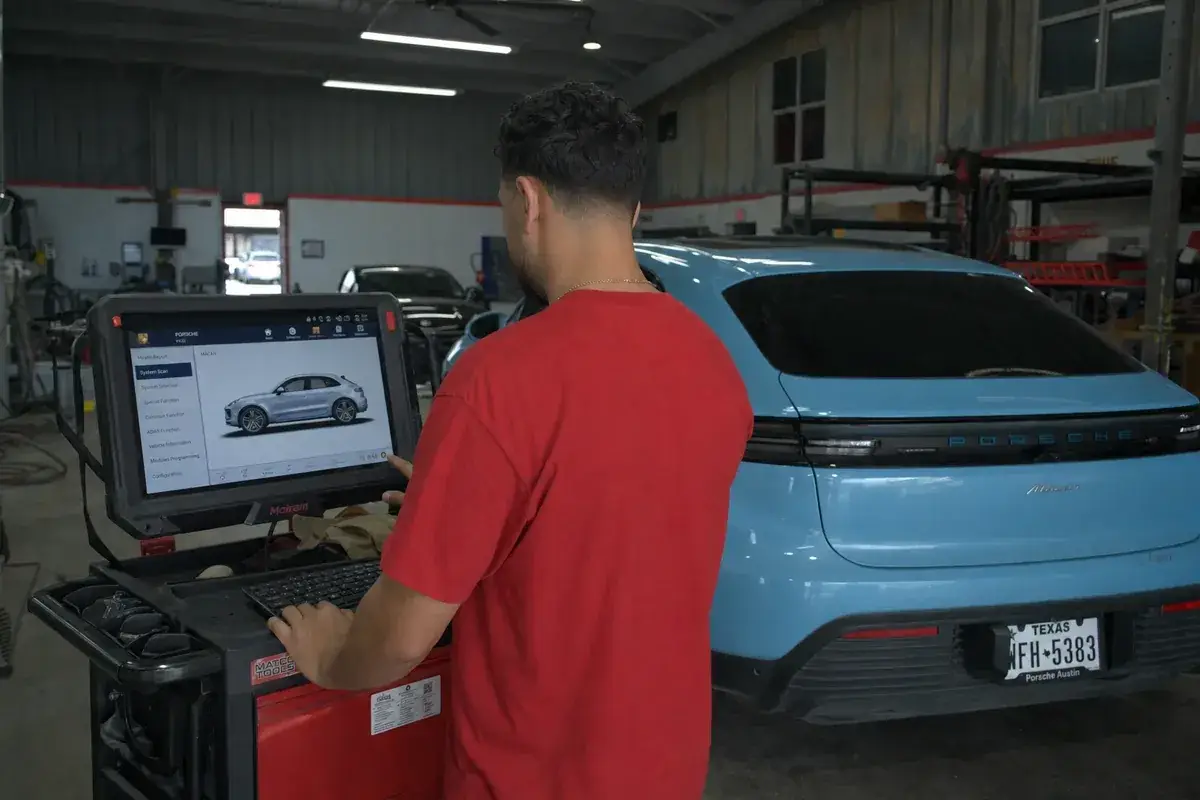
Your car watches the road through cameras behind the windshield and in the mirrors, radar behind the bumpers, and sensors all around. ADAS calibration is the precise re-aiming and electronic verification of all of it. Together those parts run the systems federal safety regulators catalog as driver assistance: automatic emergency braking, lane keeping, blind spot warning, adaptive cruise, parking sensors.
When repair work disturbs any of them, calibration is what makes their aim true again. A sensor aimed wrong is worse than no sensor, because you’re trusting it.
After most repairs and most windshield replacements. On today’s cars, only about two panels can be repaired without triggering a calibration requirement, a rear door and sometimes the roof. Everything else, bumpers hiding radar, mirrors carrying blind spot monitors, tailgates with sensors, windshields with forward cameras, calls for one. Around nine in ten windshield replacements we do need camera calibration, on most anything built since about 2018. Even removing and reinstalling your original glass for roof work triggers it.
The same goes for bumper removal when radar or sonar lives behind the cover.
We look up your manufacturer’s procedure and follow it line by line, with OEM-level equipment, in house. Our diagnostic bench runs the Mitchell Bosch with the factory OEM programs, plus Launch and Autel units that go deeper and can program new sensors, which arrive from the factory blank.
A proper calibration also starts square: an alignment comes first, because a car that doesn’t track straight can’t aim its sensors straight. Some procedures even require a full tank of fuel to set the ride height, and yes, we do that too. Whatever the book says, that’s what happens.
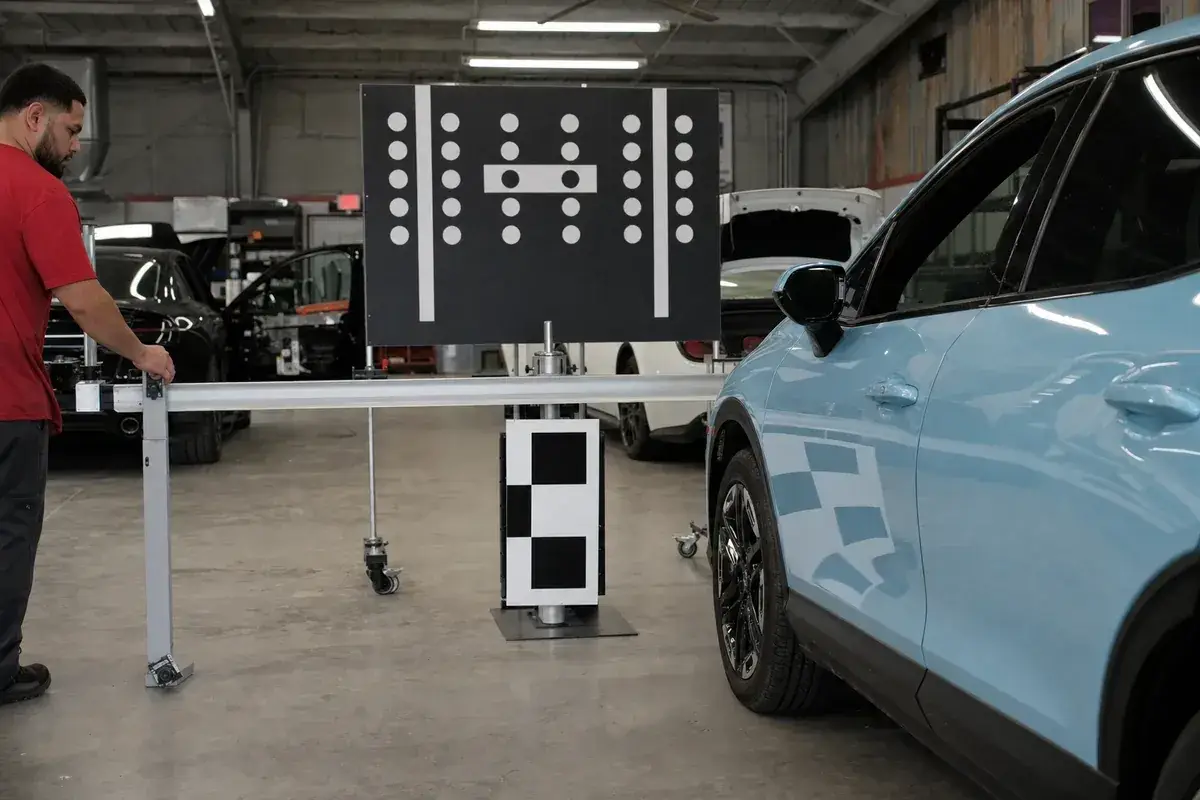
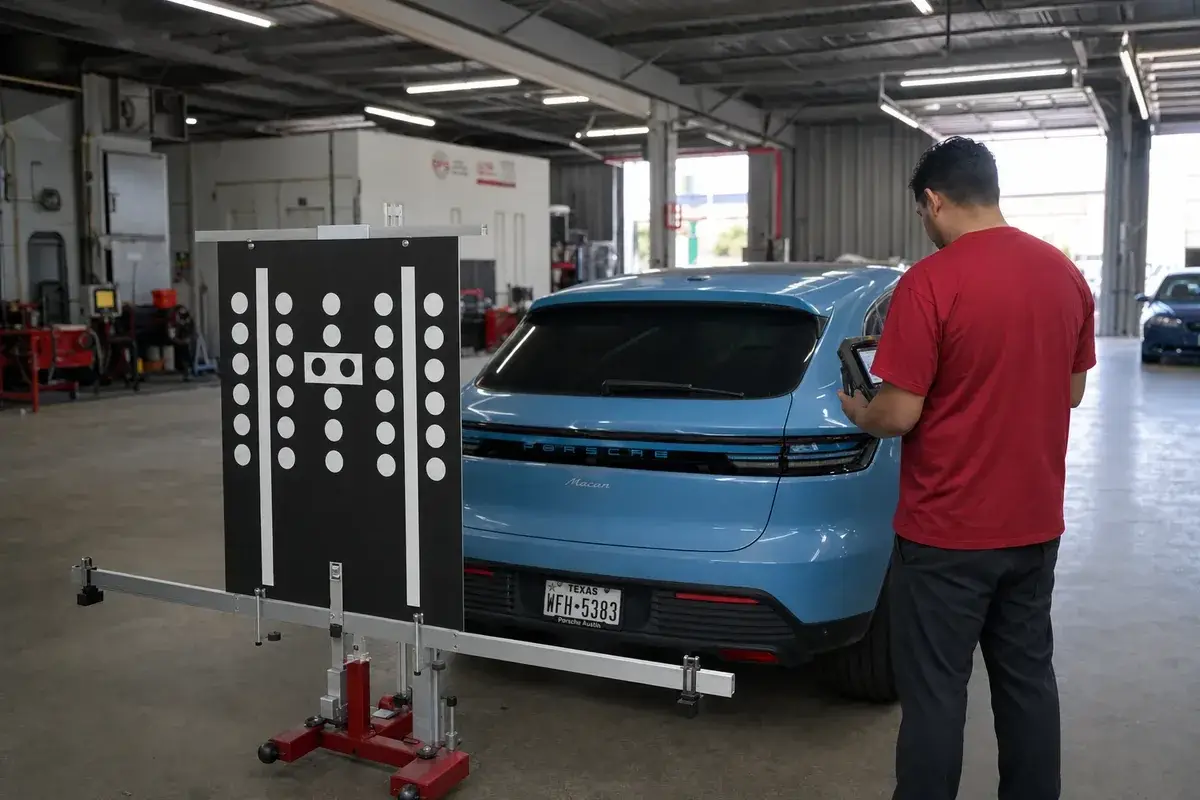
Static calibration happens in the shop. The car sits on a level floor while we place manufacturer-specified targets at measured distances. The system re-aims against those targets; that’s what the target board in our calibration bay is for. Dynamic calibration happens on the road: the car is driven at a prescribed speed on well-marked lanes while the system relearns from real markings. Your manufacturer’s procedure dictates which one, and some vehicles require both.
The distinction matters when you compare quotes. Static work needs the space, the targets, and the controlled conditions a proper bay provides. Dynamic work needs a tech who knows the required speeds and road conditions, not a parking-lot lap. We run both types in house at both shops, per the written procedure, and the result is documented with the repair either way.
Your safety systems can fail silently. A blind spot monitor that doesn’t see, automatic braking that reads the road wrong, lane keep that drifts: the failure shows up in traffic, not in the shop. That’s why we treat calibration as non-negotiable on every job that requires it, on a collision repair or a windshield. If it’s in the manufacturer’s position statement for the repair, we perform it.
The liability logic is simple: if a system we touched fails to fire, that’s on the shop that skipped the step. We don’t take that gamble with your car, or with you.
It depends on how many systems your repair disturbed, and we quote it up front, before work starts. On insurance repairs, calibration required by the manufacturer’s procedures is part of doing the job right. We document exactly that when we submit the repair plan, and insurers pay for what the position statements require. On customer-pay work, like a windshield you’re replacing out of pocket, you get the calibration price with the glass quote. No surprise at pickup.
Our claims guide explains how repair procedures and approvals work together.
Send a few photos and we will get you a clear, honest estimate. Certified, insurer-independent, and accountable for the work.