
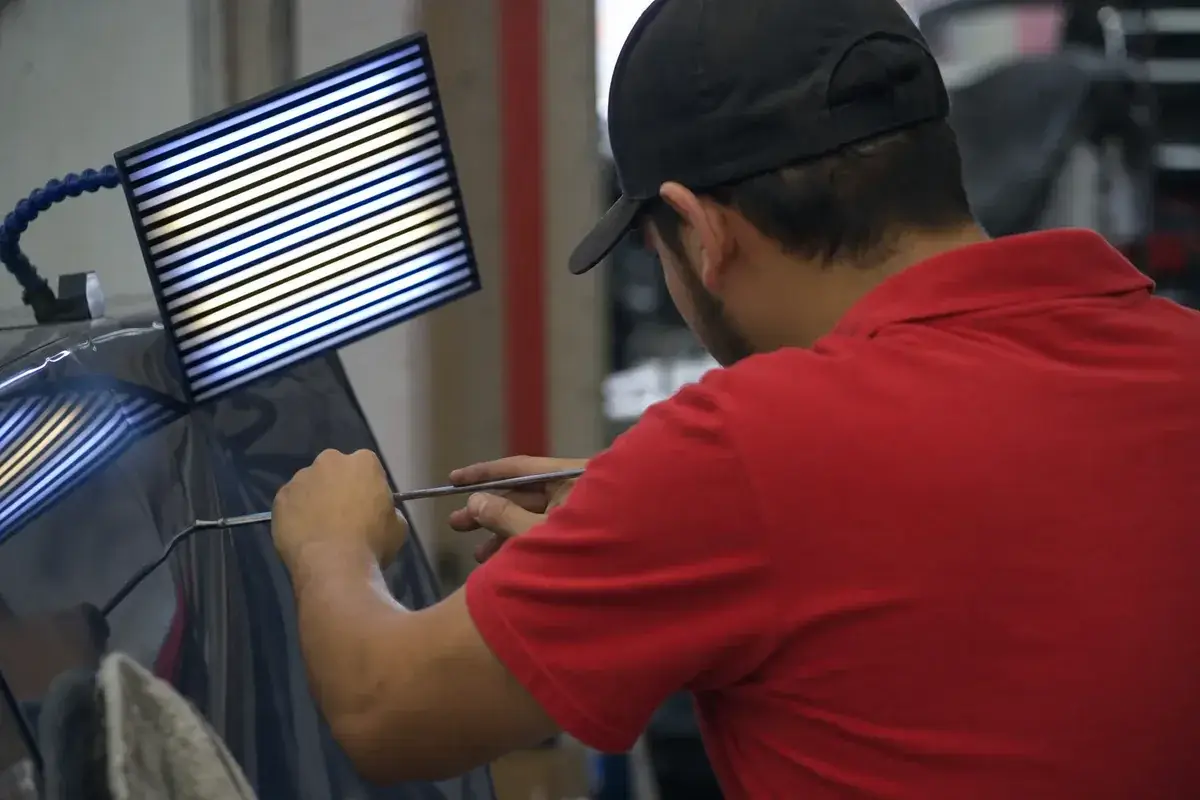
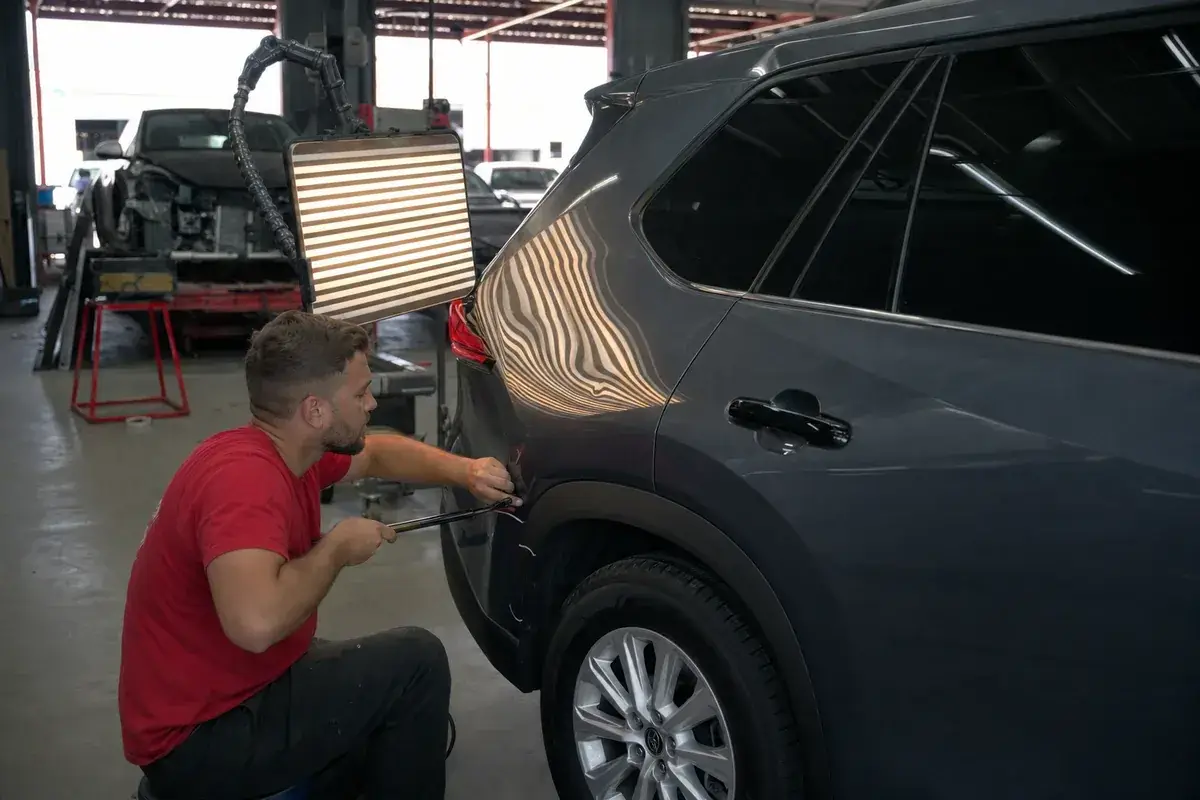
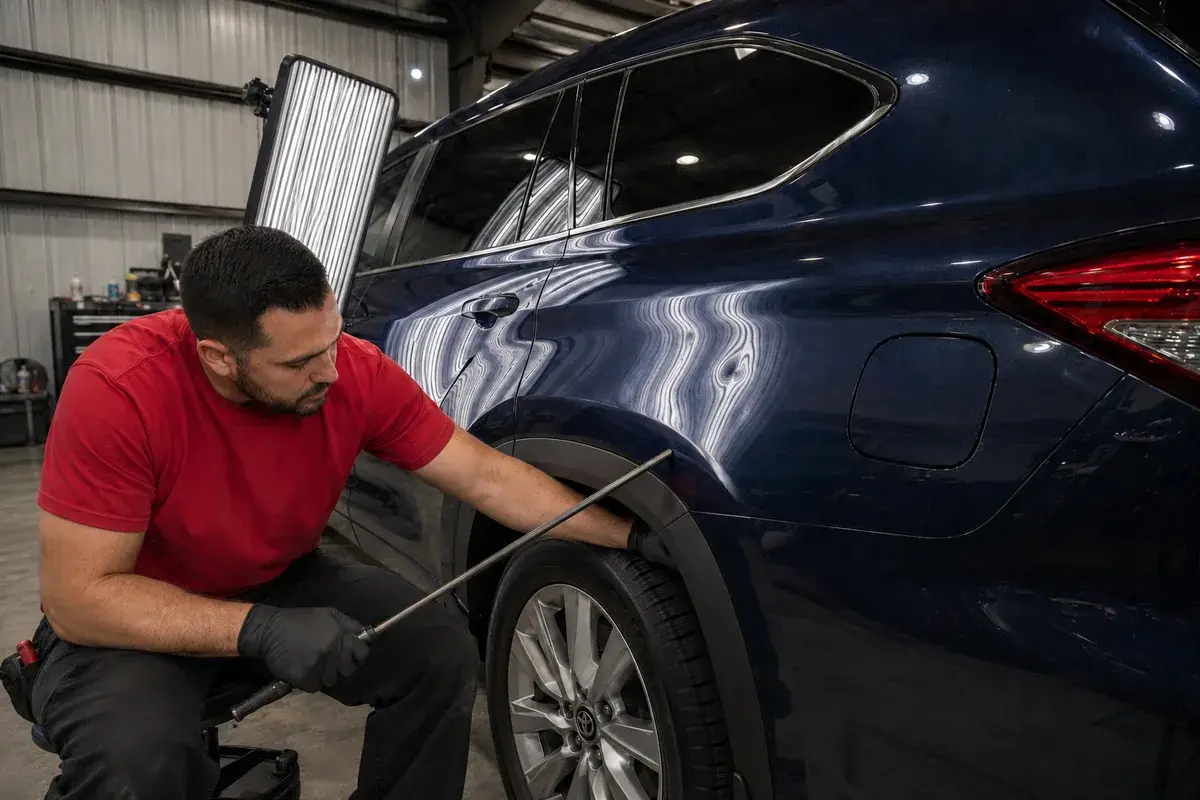
We reach the backside of the dented panel and push the metal back to its shape, using precision rods or glue pulling from the front. Your factory topcoat is never sanded, filled, or repainted. That matters because factory paint is the finish your car will never get back once it’s gone.
Customers guess wrong about PDR in two directions. Some assume every dent means body filler and a respray. Others expect dry ice and suction-cup tricks. It’s neither. It’s a skilled trade, and the access work matters as much as the dent work: interior panels, liners, and sometimes lights come off so the technician can reach the metal properly.
Most of them, including many deep ones. Door dings, parking lot dents, creases, and hail damage are everyday PDR work here. The honest limits: a dent sitting right on a style line, or a door-edge crease where the inner shell has bitten the outer skin, may need conventional body repair instead. Our technician handles most sharp dents and creases; when a dent truly needs paint, we say so before we start, not after.
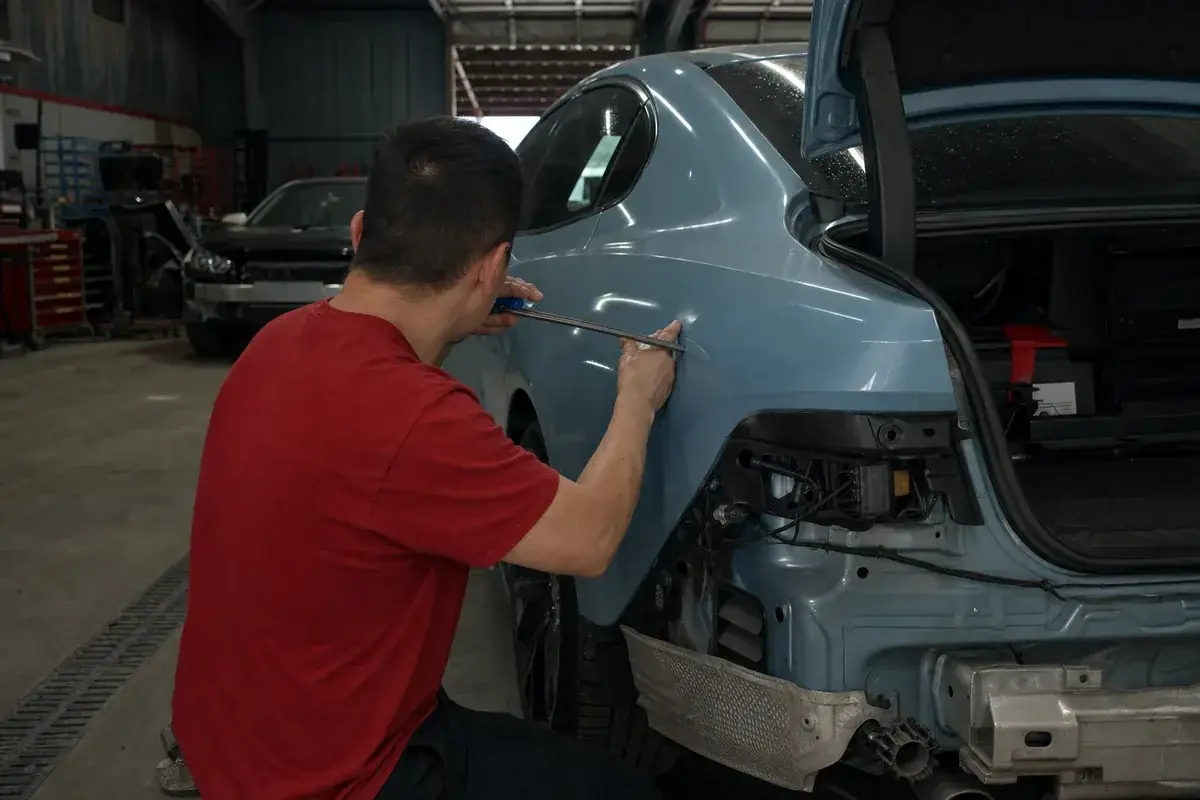
Ours, and he lives here. Our PDR technician is in Round Rock and works both of our shops every single day. That matters because much of the dent trade runs on traveling operators who follow storms, work a market for a few months, and leave, and their warranty leaves with them.
There’s a second difference. At most dent outfits, the dent operator also pulls your interior apart. Here, disassembly and reassembly are done by the same ASE-certified body technicians who do this on collision jobs daily. And the work carries our limited lifetime warranty, good for as long as you own the vehicle, backed by a shop with a fixed address, not a tent.
Two, and both are inside your panels where nobody looks. First, PDR rods scratch the underside coating of hoods, roofs, and doors, a layer called e-coat. Most shops leave those scratches. We refinish the e-coat so the inside of the panel is protected like the outside.
Second, hoods and doors carry structural adhesive that some operators cut to gain access and never replace. When that happens here, factory-spec glue goes back in. The panel stays as solid as it was built.
Yes, and we do it regularly. Aluminum is the trickier metal: steel wants to return to its original shape, aluminum doesn’t. Working it takes more time and skill, so aluminum panels can cost somewhat more depending on the dent’s location. Many hoods and an increasing number of doors are aluminum now, which is exactly why it’s worth asking a shop whether they actually work it before handing over your keys.
PDR is priced per panel by dent size, in classes: nickel, dime, quarter, and oversize. A typical full PDR job lands between 2,500 and 5,000 dollars, and small single-dent jobs cost far less. Timing runs from a few hours for a small job dropped off in the morning to about three days for major hail damage. If your dents come from a storm, insurance usually pays under comprehensive coverage, and our claims guide explains how that works.
Photos of the dent are enough for us to quote it, free, through the photo estimate.
Real Podium work. Photography is added as jobs are documented.
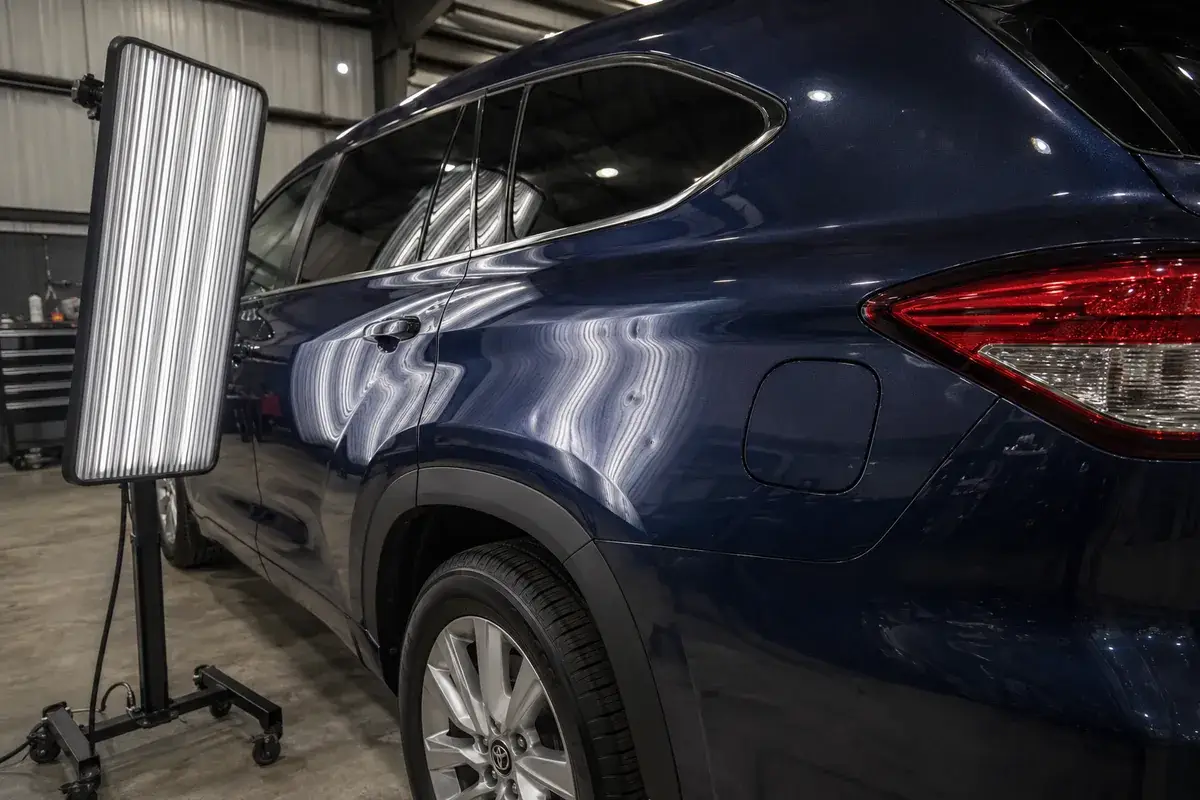
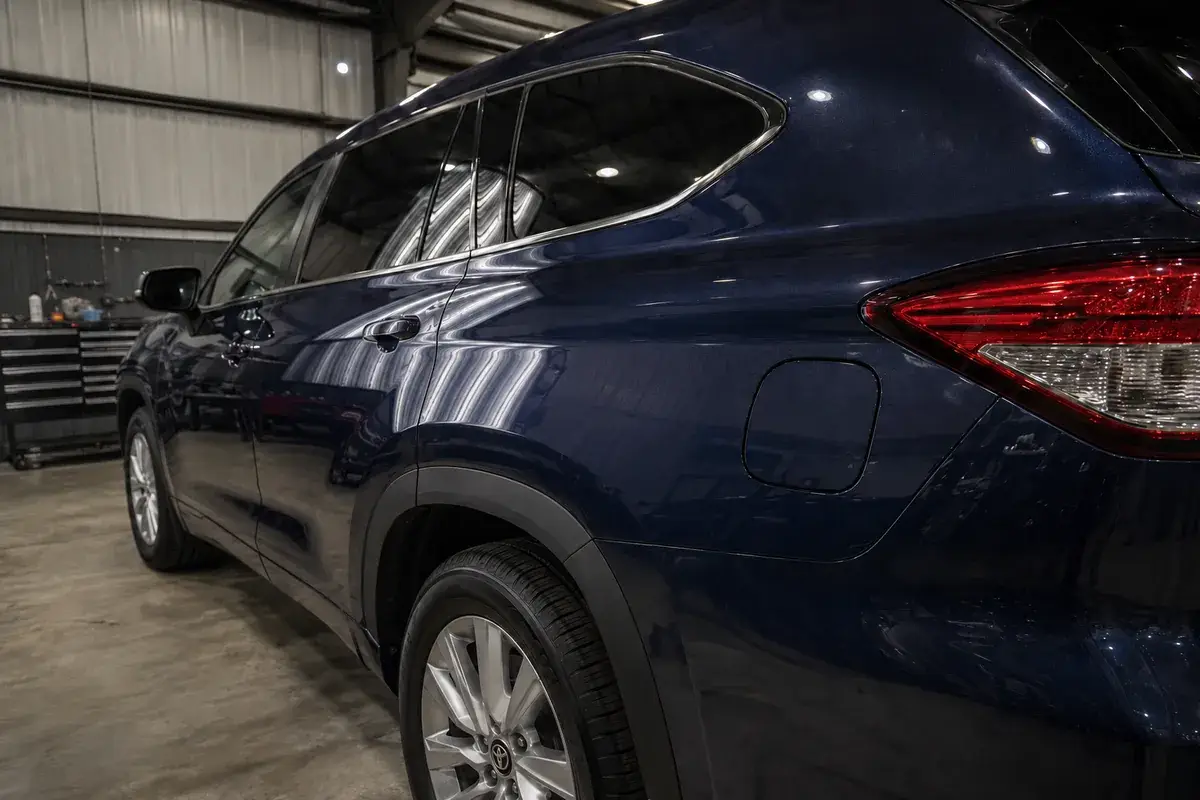
Paint-less dent repair before.
Send a few photos and we will get you a clear, honest estimate. Certified, insurer-independent, and accountable for the work.